
VISIT UTAH .org
Utah's HTA - Hospitality & Tourism, 2023
|
|
|
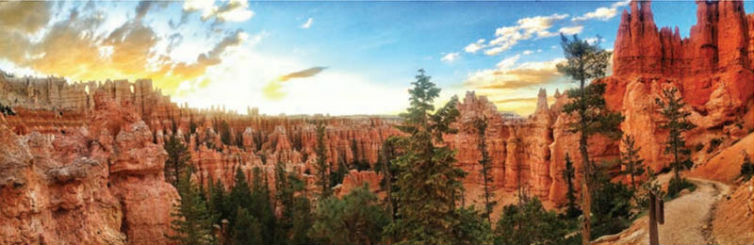
Utah's National Parks and Monuments Welcome to Utah's HTA - Hospitality & Tourism, our official online edition - Celebrating 25 Years! Whether visiting for business or pleasure, our free pocket guides provide the planning tools to help make your Utah Visit be a memorable experience. Reviews, tips, discount offers on hotel lodging, condo rentals, golf, restaurants, activities, attractions and much more, all with one goal in mind, to get you the latest information for your upcoming Visit to Utah. Utah's National Parks and Monuments are featured on this page of our 2023 Pocket Travel Planner. 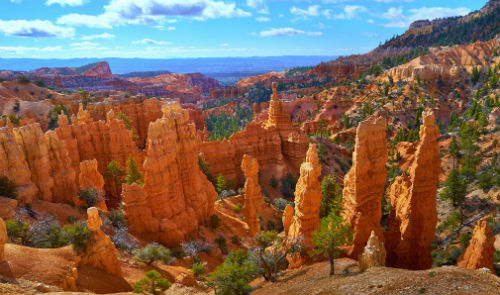
The sheer beauty of Utah's National Parks and Monuments are, "we'll let you decide!" You can camp at all the national parks in Utah, and each offers ranger-led activities. Geology is an important element in all of Utah's national parks, with impressive rock formations forming the bases of all them. In addition, Gold Star families and veterans of the U.S. Armed Forces will receive free lifetime passes to all National Parks. 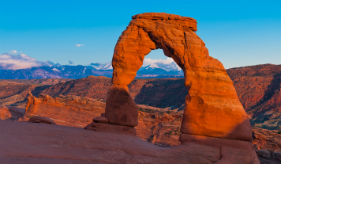 Arches National Park Arches is located in Southern Utah, near the city of Moab. Arches National Park preserves over two thousand natural sandstone arches, including the world-famous Delicate Arch, in addition to a variety of unique geological resources and formations. In some areas, faulting has exposed millions of years of geologic history.The extraordinary features of the park, including balanced rocks, fins and pinnacles, are highlighted by a striking environment of contrasting colors, landforms and textures. P.O. Box 907, Moab, UT 84532 Phone: 435-719-2299 Arches National Park Official Website 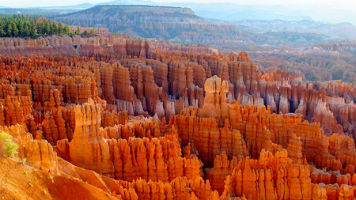 Bryce Canyon National Park Bryce Canyon, famous for its worldly unique geology, consists of a series of horseshoe-shaped amphitheaters carved from the eastern edge of the Paunsaugunt Plateau in southern Utah. The erosional force of frost-wedging and the dissolving power of rainwater have shaped the colorful limestone rock of the Claron Formation into bizarre shapes including slot canyons, windows, fins, and spires called "hoodoos." P.O. Box 640201, Bryce, UT 84764-0201 Phone: 435-834-5322 Bryce Canyon National Park Official Website 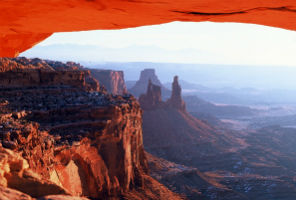 Canyonlands National Park Located in the same corner of Utah as Arches, Canyonlands lies in terrain created by the Colorado and Green Rivers. This Utah national park is a haven for off-road recreation fans with several ATV trails. Visitors can also indulge in whitewater rafting, hiking and cycling. Canyonlands National Park preserves a colorful landscape of sedimentary sandstones eroded into countless canyons, mesas and buttes by the Colorado River and its tributaries. The Colorado and Green rivers divide the park into four districts: the Island in the Sky, the Needles, the Maze and the rivers themselves. While the districts share a primitive desert atmosphere, each retains its own character and offers different opportunities for exploration and learning. Canyonlands invites you to explore a wilderness of countless canyons and fantastically formed buttes carved by the Colorado River and its tributaries. Rivers divide the park into four districts: the Island in the Sky, the Needles, the Maze, and the rivers themselves. These areas share a primitive desert atmosphere, but each offers different opportunities for sightseeing and adventure. 2282 SW Resource Blvd., Moab, UT 84532 Phone: 435-719-2313 Canyonlands National Park Official Website 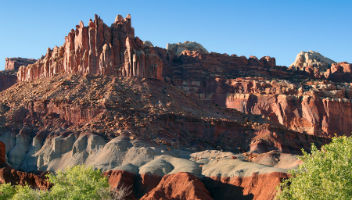 Capitol Reef National Park The Waterpocket Fold, a 100-mile long wrinkle in the earth's crust known as a monocline, extends from nearby Thousand Lakes Mountain to the Colorado River (now Lake Powell). Capitol Reef National Park was established to protect this grand and colorful geologic feature, as well as the unique historical and cultural history found in the area. HC 70 Box 15, Torrey, UT 84775 Phone: 435-425-3791 Capitol Reef National Park Official Website 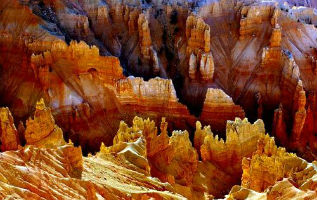 Cedar Breaks National Park A huge natural amphitheater has been eroded out of the variegated Pink Cliffs (Claron Formation) near Cedar City, Utah. Millions of years of sedimentation, uplift and erosion have created a deep canyon of rock walls, fins, spires and columns, that spans some three miles, and is over 2,000 feet deep. The rim of the canyon is over 10,000 feet above sea level, and is forested with islands of Englemann spruce, subalpine fir and aspen; separated by broad meadows of brilliant summertime wild flowers. Cedar Breaks National Park Official Website 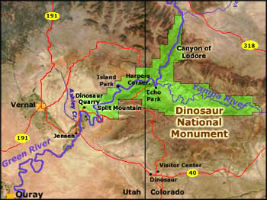 Dinosaur National Monument This is Echo Park, named by John Wesley Powell in 1869 during his first scientific expedition into the Colorado Plateau. It is here that the Yampa River, the last natural flowing river in the Colorado River System, joins the Green River. This is home and critical habitat for the endangered peregrine falcon, bald eagle, Colorado pikeminnow, and razorback sucker. Indian rock art in Echo Park testifies to the allure these canyons and rivers had for prehistoric people. In 1825, William H. Ashley and his fur trappers were the first Europeans to enter Echo Park. In 1883, Patrick Lynch, a hermit, was the first to homestead in this canyon. Dinosaur National Monument Official Website 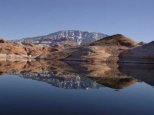 Glen Canyon National Recreation Area Lake Powell at Glen Canyon National Recreation Area (NRA) offers unparalleled opportunities for water-based & backcountry recreation. The recreation area stretches for hundreds of miles from Lees Ferry in Arizona to the Orange Cliffs of southern Utah, encompassing scenic vistas, geologic wonders, and a panorama of human history. Additionally, the controversy surrounding the construction of Glen Canyon Dam and the creation of Lake Powell contributed to the birth of the modern day environmental movement. The park offers opportunities for boating, fishing, swimming, backcountry hiking and four-wheel drive trips. Lake Powell at Glen Canyon National Recreation Area Official Website  Golden Spike National Historic Site Completion of the world's first transcontinental railroad was celebrated here where the Central Pacific and Union Pacific Railroads met on May 10, 1869. Golden Spike was designated as a national historic site in nonfederal ownership on April 2, 1957, and authorized for federal ownership and administration by an act of Congress on July 30, 1965. Golden Spike National Historic Site Official Website 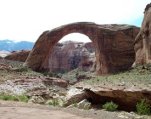
Rainbow Bridge National Monument Rainbow Bridge is the world's largest natural bridge. The span has undoubtedly inspired people throughout time--from the neighboring American Indian tribes who consider Rainbow Bridge sacred, to the 300,000 people from around the world who visit it each year. Please visit Rainbow Bridge in a spirit that honors and respects the cultures to whom it is sacred. While Rainbow Bridge is a separate unit of the National Park Service, it is proximate to and administered by Glen Canyon National Recreation Area. Rainbow Bridge National Monument Official Website  Timpanogos Cave National Monument Timpanogos Cave National Monument sits high in the Wasatch Mountains. The cave system consists of three spectacularly decorated caverns. Each cavern has unique colors and formations. Helictites and anthodites are just a few of the many dazzling formations to be found in the many chambers. As visitors climb to the cave entrance, on a hike gaining over 1,000 feet in elevation, they are offered incredible views of American Fork Canyon. Timpanogos Cave National Monument Official Website 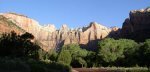 Zion National Park Zion, Utah's oldest and busiest national park, opened in 1919. This Utah national park is characterized by deep canyons, which you can best appreciate by being small among them. Vividly colored sandstone makes hikes in Zion a spectacular event, and 900 species of plants grow here. Zion has information about early settlers, the Anasazi, as well as geology and recreation. Zion is in southwestern Utah. If visitors are in an RV, they will need an escort to go through the Zion tunnel, but they can avoid this by using their tow vehicle or entering at the south entrance. Springdale, UT 84767 435-772-3256 Zion National Park Official Website 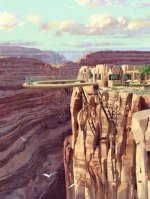 Grand Canyon Skywalk The Skywalk, managed by the Hualapai Tribe and located on tribal lands, consists of a horseshoe shaped steel frame with glass floor. The walkway juts 70 feet out from the rim, offering paying visitors the opportunity to safely peer 4,000 feet down to the bottom of the Canyon. The skywalk is part of a larger attraction called Grand Canyon West, which features an Indian village and "western-themed town." Grand Canyon Skywalk Official Website Paradise Village at Zion is a new vacation home resort community in Southern Utah  Introducing this vacation home resort community, the Paradise Village at Zion! Managed and operated by Utah's Best Vacation Rentals. Featuring over 90 vacation homes, custom clubhouse with an incredible two-tier resort pool with waterfall, waterslide, shamu kiddie pool, and hot tub/spa. This vacation home village is a first-of-its-kind master-planned vacation home resort specifically designed and built with traveling groups and families of all sizes in mind. Two homes per month are being completed at the Village, along with pool area, and all community amenities. Utah's Best Vacation Rentals - Paradise Village 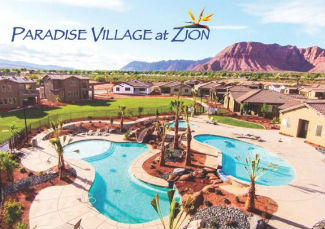
Getaway to Southern Utah! 5 Homes now available at the NEW Paradise Village at Zion The pool is now open and is a must see! Enjoy a fun weekend in southern Utah at our new Paradise Village in Santa Clara. Golf, visit Zion National Park, Snow Canyon, Bryce Canyon, or St. George. We now have 5 newly completed 3 bedroom homes available (each sleep 10). Utah's Best Vacation Rentals - Paradise Village - View Photos Site Features, Our Menu  Common Questions Answered Salt Lake City Photos Genealogy Research LDS Mormon Attractions & Sites Sightseeing Tours Attractions & Sites Free Visitor Coupons Our Liquor Laws Salt Lake City Maps What To See & Do in Salt Lake Salt Lake Bars & Sports Salt Lake City Restaurants Common Questions Answered Salt Lake City Photos Genealogy Research LDS Mormon Attractions & Sites Sightseeing Tours Attractions & Sites Free Visitor Coupons Our Liquor Laws Salt Lake City Maps What To See & Do in Salt Lake Salt Lake Bars & Sports Salt Lake City Restaurants
Salt Lake Lodging Options  Downtown Salt Lake City Hotels Salt Lake City Hotels Helpful Hotel Hints Hotels Mid Valley Area of Salt Lake City Temporary Housing Salt Lake City Ski Lodging Free Lodging Brochures & Info Downtown Salt Lake City Hotels Salt Lake City Hotels Helpful Hotel Hints Hotels Mid Valley Area of Salt Lake City Temporary Housing Salt Lake City Ski Lodging Free Lodging Brochures & Info
Salt Lake Transportation, Taxis, UBER, Shuttles  Salt Lake City Shuttles Airport Shuttles Shuttles To Park City Car Rentals, UBER Salt Lake City Shuttles Airport Shuttles Shuttles To Park City Car Rentals, UBER
Southern Utah, Our National Parks  Utah's State Parks Utah's National Parks Utah's State Parks Utah's National Parks
Visit Park City Utah  Park City Lodging, Vacation Rentals, Condos Park City Hotels Park City Luxury Hotels Utah Olympic Park Free Lodging Brochures & Info Park City Tourism Visitor Info Park City Lodging, Vacation Rentals, Condos Park City Hotels Park City Luxury Hotels Utah Olympic Park Free Lodging Brochures & Info Park City Tourism Visitor Info
Utah Winters  Utah Ski Resorts Daily Ski Report & Discount Lift Tickets Alta & Snowbird Vicinity Ski Lodging Ski Salt Lake's Official Website Park City Vacation Lodging Driving Instructions To Utah's Ski Resorts Apres Ski / Salt Lake Bars, Nightlife Utah Ski Resorts Daily Ski Report & Discount Lift Tickets Alta & Snowbird Vicinity Ski Lodging Ski Salt Lake's Official Website Park City Vacation Lodging Driving Instructions To Utah's Ski Resorts Apres Ski / Salt Lake Bars, Nightlife
Summertime in Utah, What to See and Do Utah Golf Courses, Our Best To Play Things To See & Visit Throughout Salt Lake City Horseback Riding in Utah Hiking / Climbing / Camping / Fishing / Boating / Parks Kennecott Copper Mine Utah's State Parks Utah's National Parks Utah Olympic Speedskating Oval in Salt Lake City Renting Motorcycles In Utah Taste of Salt Lake's Downtown Dining
 By Email 
Welcome, we are proud to bring you our official Visit Utah Travel Planner. Providing the planning tools to help make your Utah Visit be a seamless and memorable experience. Reviews, tips, discounts on hotel lodging, condo rentals, golf, restaurants, activities, attractions and much more, all with one goal in mind, to get you the latest information for your upcoming visit to Utah. Views Utah's HTA - Utah Hospitality & Tourism Association Publisher of the Visit Utah.org 2023 Travel Planner © Copyright 1998 - 2023. All Rights Reserved. |